기출 학습 › 2020학년도 6월 모의평가 영어 › 42번
2020학년도 6월 모의평가 영어 42번 기출문제·정답
출처: 한국교육과정평가원 · 2020학년도 6월 모의평가 영어 · 42번 · 3점
공식 문제지 8쪽 ↗공식 정답표 ↗문제·정답·듣기 다운로드
2020학년도 6월 모의평가 영어 · 42번
기출문제
문제
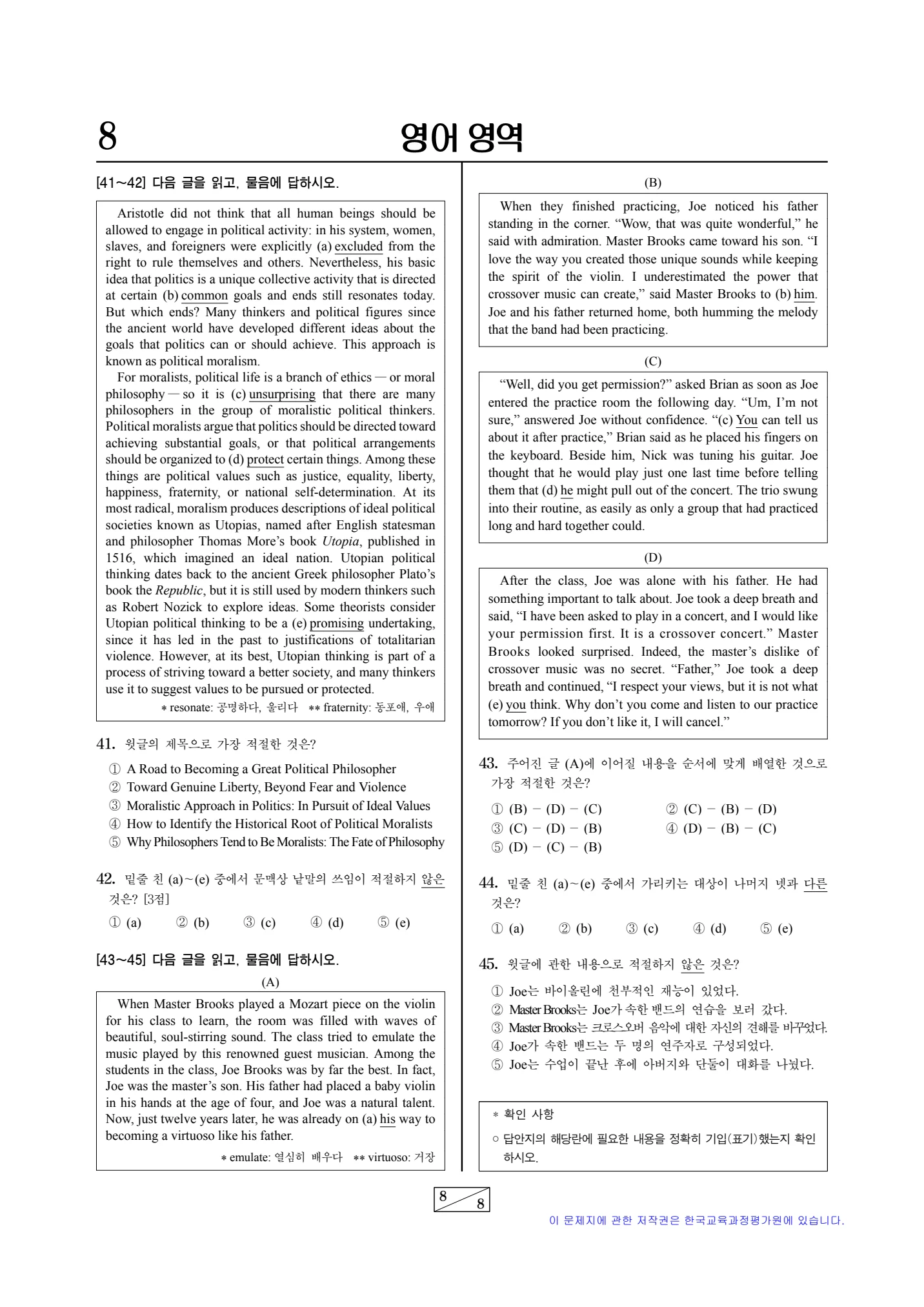
밑줄 친 (a)~(e) 중에서 문맥상 낱말의 쓰임이 적절하지 않은 것은? [3점] ① (a) ② (b) ③ (c) ④ (d) ⑤ (e)
Aristotle did not think that all human beings should be allowed to engage in political activity: in his system, women, slaves, and foreigners were explicitly (a) excluded from the right to rule themselves and others. Nevertheless, his basic idea that politics is a unique collective activity that is directed at certain (b) common goals and ends still resonates today. But which ends? Many thinkers and political figures since the ancient world have developed different ideas about the goals that politics can or should achieve. This approach is known as political moralism. For moralists, political life is a branch of ethics ― or moral philosophy ― so it is (c) unsurprising that there are many philosophers in the group of moralistic political thinkers. Political moralists argue that politics should be directed toward achieving substantial goals, or that political arrangements should be organized to (d) protect certain things. Among these things are political values such as justice, equality, liberty, happiness, fraternity, or national self-determination. At its most radical, moralism produces descriptions of ideal political societies known as Utopias, named after English statesman and philosopher Thomas More’s book Utopia, published in 1516, which imagined an ideal nation. Utopian political thinking dates back to the ancient Greek philosopher Plato’s book the Republic, but it is still used by modern thinkers such as Robert Nozick to explore ideas. Some theorists consider Utopian political thinking to be a (e) promising undertaking, since it has led in the past to justifications of totalitarian violence. However, at its best, Utopian thinking is part of a process of striving toward a better society, and many thinkers use it to suggest values to be pursued or protected.
* resonate: 공명하다, 울리다 ** fraternity: 동포애, 우애
선지
지문·선지 단어 뜻 보기
지문 어휘
선지 어휘
이 부분에는 별도로 표시할 영어 단어가 없습니다.
사전의 기본 뜻입니다. 문장 속 쓰임에 따라 뜻이 달라질 수 있습니다. 인명·지명 등 사전에 없는 표현은 사전 검색으로 연결합니다.
어휘 자료: Open English-Korean Dictionary · LexiSnap contributors · CC BY-SA 4.0 · 사용한 사전 데이터 · 출처. 한국어 기본 뜻 추출·활용형 연결.
공식 정답 보기
정답: ⑤ · 3점
원본 시험지 보기 · 도표·밑줄·빈칸 확인
텍스트에서 표현되지 않는 도표, 밑줄과 빈칸은 원본을 기준으로 확인하세요. 공통 지문이 앞쪽에 있으면 PDF의 앞 페이지도 확인하세요.
SENTENCE STRUCTURE · 수강생 전용
이 지문의 문장 구조 학습
수강생 로그인 후 선정 문장과 문장 구조 학습을 이용할 수 있습니다.